Why Jeju's Soft Corals Are a National Treasure
Jeju's soft coral colonies (Natural Monument No. 442): why coral is an animal, the warm current behind them, key species and how to see them.
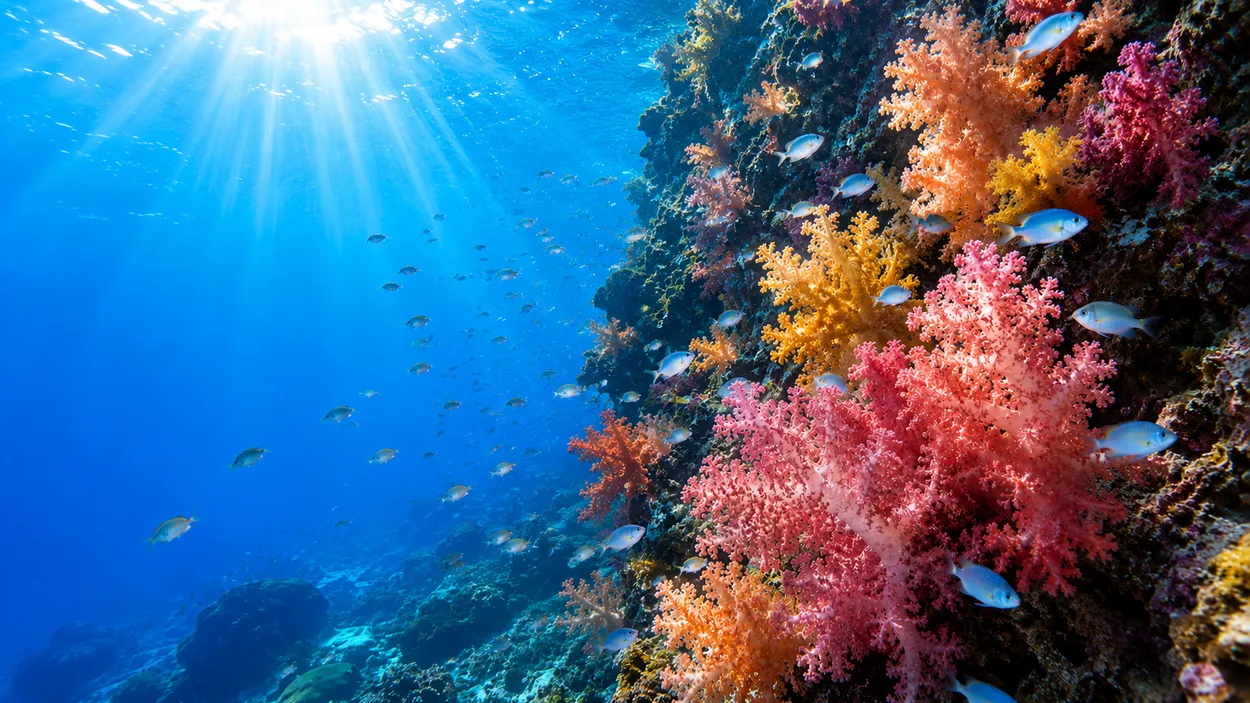
Jeju's soft coral colonies, Korea's largest, grow in the waters off Seogwipo (Beomseom, Munseom, Seopseom) and the Songaksan coast (around Hyeongjeseom), protected since 2004 as Korea Natural Monument No. 442, the "Jeju Coastal Soft Coral Communities." Crimson, violet, and orange colonies blanket the underwater cliffs, which is why divers call this place an "underwater flower garden." An instructor who meets this garden every day explains what soft corals are and why they matter.
“Back on the boat, the thing guests say most often is: ‘Is this really Korea?’ Everyone reacts the same way the first time they see the soft coral wall.” Bae Kyung-jo, RAID Master Instructor · SSI Advanced Instructor
Coral is an animal, so what is a soft coral?
The most common question first: coral is neither plant nor rock, it's an animal. Like sea anemones and jellyfish, corals are cnidarians; thousands of tiny individuals called polyps join into one colony.
- Hard corals: build rigid limestone skeletons and stack reefs, the stars of tropical seas
- Soft corals: no rigid skeleton; supple bodies swaying with the current. Each polyp carries eight tentacles, placing them among the octocorals
The Korean name is even more intuitive, the open polyps resemble the cockscomb flower (mandremi), so the flagship species carry names in the "Suji-mandremi" family. Meet one underwater and the name explains itself.
Why Jeju, of all places, a warm current's temperate miracle
Seas this dense with soft corals are globally rare. In the tropics, Fiji is called the soft coral capital, yet temperate Jeju matches tropical density, thanks to a warm current. A branch of the Kuroshio brushes Jeju's southern coast, holding winter water around 15°C, while steady currents deliver plankton, a soft coral's food supply.
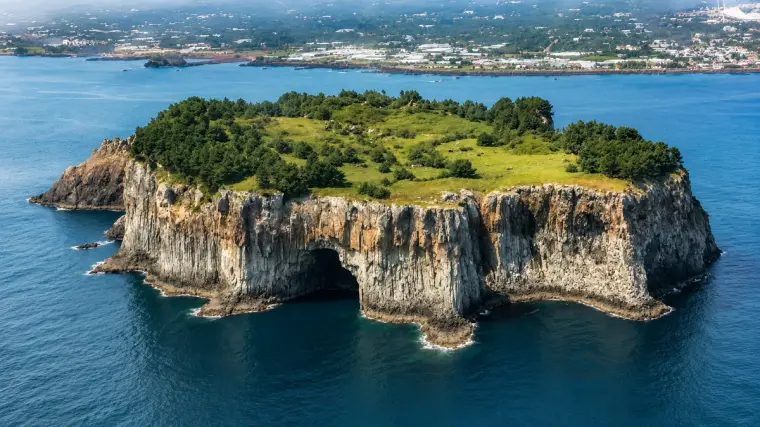
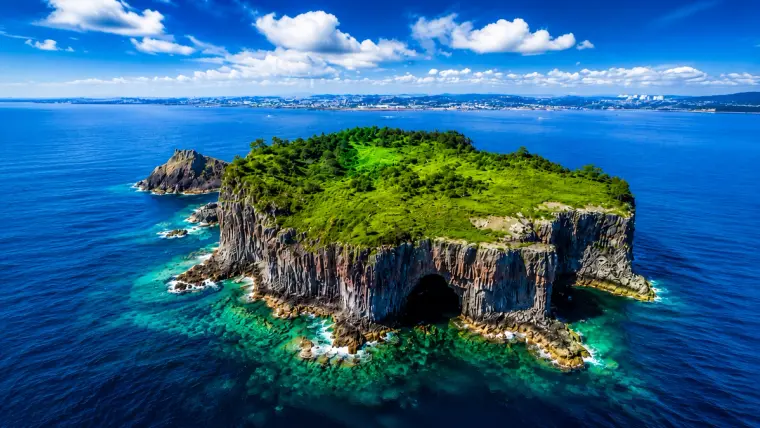
Then the terrain seals it. The vertical cliffs and columnar joints of Beomseom, Munseom, and Seopseom, born in volcanic eruptions 800,000 years ago are exactly where current-swept soft corals like to live. The volcanic walls became, quite literally, the garden's flowerpots.
Natural Monument No. 442, what's protected, and where
- Designation: Jeju Coastal Soft Coral Communities (Natural Monument No. 442, designated 2004)
- Range: the Seogwipo waters (around Seopseom, Munseom, Beomseom) and the Songaksan coast (Hyeongjeseom and nearby waters)
- Meaning: a rare marine monument designated purely for the ecosystem's own conservation value, not as a fishery resource
Separately, the Beomseom area has been Natural Monument No. 421 (Munseom & Beomseom Natural Reserve) since 2000. Diving Beomseom means entering a sea the state has stamped twice for protection, and the reason nature documentaries keep returning here.
Who lives on the walls, flagship and endangered species
The flagship species of Beomseom's soft-coral colony are keun-suji-mandremi and pink sea-mandremi, while five species, dark-red, purple, white, pale, and chestnut suji-mandremi, are designated endangered wildlife in Korea.
- Keun-suji-mandremi and pink sea-mandremi: the flagship species, the leads of the pink-and-orange flowerbeds
- Five soft corals designated endangered wildlife in Korea: the dark-red, purple, white, pale, and chestnut suji-mandremi species, distinguished, as their names suggest, by color
Even on one wall, species shift with depth and current, the flowerbed at 10m and the one at 20m wear different palettes. Polyps open widest when the current flows (that's feeding time), so a day with gentle current shows the corals at their most vivid.
The garden's neighbors, a flowerbed never lives alone
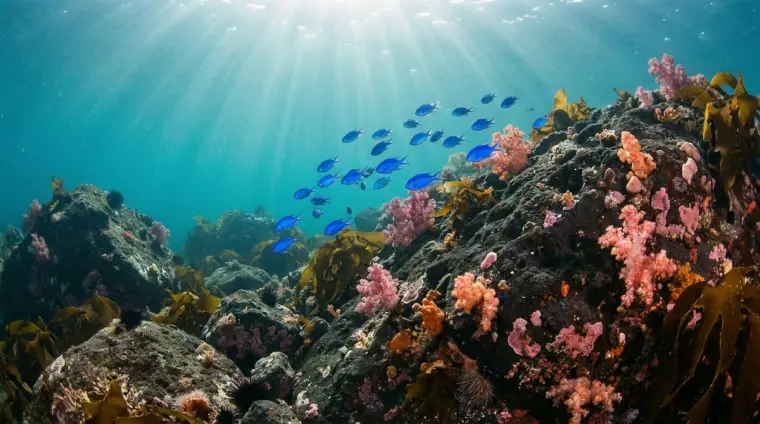
Around the soft-coral walls live neighbors like damselfish schools, nudibranchs, and a kelp forest, a single colony is a small ecosystem in itself.
A soft coral colony is an apartment complex in itself. All manner of creatures rent space between the corals:
- Damselfish schools: in summer they gather like clouds before the coral walls to spawn. A silver fish-cloud in front of a pink flowerbed, Beomseom's signature scene
- Nudibranchs: some species feed on soft corals, so they turn up around the colonies, fingernail-sized and fluorescent, the reason macro photographers come here
- Kelp forest and rock dwellers: below the coral walls run temperate seaweed forests, tropical and temperate ecosystems overlapping at a single point
Which is why, on a dive meant for the corals, what stays with you is often "everyone who lived on that wall."
A four-season field diary, when is it most beautiful?
The best time for photography is autumn (Sep–Nov, peak temperature and visibility); the clearest water comes in winter (Dec–Feb). Summer brings damselfish spawning; spring is a quiet season for experienced divers.
- Summer (Jun–Aug): damselfish spawning, the flowerbed-plus-fish-cloud combination at its peak
- Autumn (Sep–Nov): temperature and visibility both peak. Prime time for coral photography
- Winter (Dec–Feb): the surprise pick. The year's clearest water, and polyps spread wide to catch plankton
- Spring (Mar–May): colder, but often calm, the experienced divers' quiet season
There's no single right answer, the same wall becoming a different flowerbed each season is why this sea never gets old, even daily.
A garden under threat, and a diver's manners
The colonies face coastal development, water-quality pressure, and climate-driven habitat change, and environmental groups monitor these waters continuously. A diver's part is clear:
- Don't touch: polyps are damaged by a brush of the hand. No collecting, no contact
- Control your buoyancy: keep fins off the wall, one reason instructors manage your distance on a discover dive
- Take only photos: the reserve's baseline rule
We enter this sea every day, for us these aren't business rules but survival rules.
Why see it now, a sea in transition
As Jeju's water warms with the climate, the makeup of these colonies is shifting too. In the field we watch southern species like anemonefish settle in, while researchers and environmental groups track changes in the coral habitat. For better or worse, today's flower garden is a sight that belongs to today the Beomseom wall of ten years from now will surely wear a different palette. The more divers who witness this sea, the more eyes there are to protect it.
A diver's viewing tip, bring a light to see the real colors
The corals bloom most vividly on cliff zones at 10–25m. But physics sets a trap: water absorbs red light first, so below about 10m the corals' crimson reads as dull brown to the naked eye. Shine a dive light and the hidden palette switches on, scarlet, violet, orange. That's why a light is essential kit at Beomseom, and why photos aren't exaggerating the colors, the colors are real.
Snorkeling only skims the shallow edges, so scuba is the real way in, non-swimmers included via a discover dive, while certified divers meet the full walls at Train Rock and the Wall. Deciding how to start? See discover diving vs. Open Water.
FAQ
Where are Jeju's soft coral colonies?
In the waters off Seogwipo around Beomseom, Munseom, and Seopseom, and along the Songaksan coast near Hyeongjeseom, Korea's largest soft coral habitat, protected as Natural Monument No. 442 since 2004.
How are soft corals different from regular corals?
Hard corals build rigid limestone skeletons and form reefs; soft corals have no rigid skeleton and sway with the current. Their polyps carry eight tentacles (octocorals), and their open shape resembles a cockscomb flower.
Why does temperate Jeju have so many soft corals?
A warm Kuroshio-branch current keeps winter water around 15°C and delivers steady plankton, while volcanic vertical cliffs provide the current-swept walls soft corals favor. This density in a temperate sea is globally rare.
Do I have to scuba dive to see the soft corals?
Their most vivid depth is 10–25m, so scuba diving is the best way. Even non-swimmers can see the coral grounds on a discover dive with an instructor accompanying one-on-one.
Why do the corals' red colors look dull underwater?
Water absorbs red light first, so below about 10m red soft corals appear brown to the naked eye. Shine a dive light and the true scarlet, violet, and orange colors appear exactly as in photos.
About the author
Related Posts